The Hidden Debt of Building Leaderboards In-House

Ask any backend engineer how to build a leaderboard, and you’ll likely be recommended the Redis sorted set (ZSET).
And they'd be right. Redis is incredibly efficient at ranking. It offers O(log(N)) time complexity for insertions and updates, making it a perfect fit for a global list of users. You build the prototype in an afternoon, the leaderboard looks great in staging, and you move on to the "real" features of your app.
But here is the trap: the first 10% of building a leaderboard system is deceptively easy. The remaining 90% is where the hidden debt lives—a permanent tax on your engineering roadmap that most startups don't account for until it's too late.
Why Redis ZSET Isn't Enough
The "just use Redis" strategy works perfectly for one thing: a single, global list of every user in your database. However, modern consumer apps rarely rely on global ranks anymore. To drive real engagement, you need context.
As soon as your product requirements evolve, the limitations of a single Redis list become clear:
- No Historical Context: Where was this user ranked yesterday? Redis tells you the current state, but it doesn't natively store the time-series data needed to show a user their progress over time.
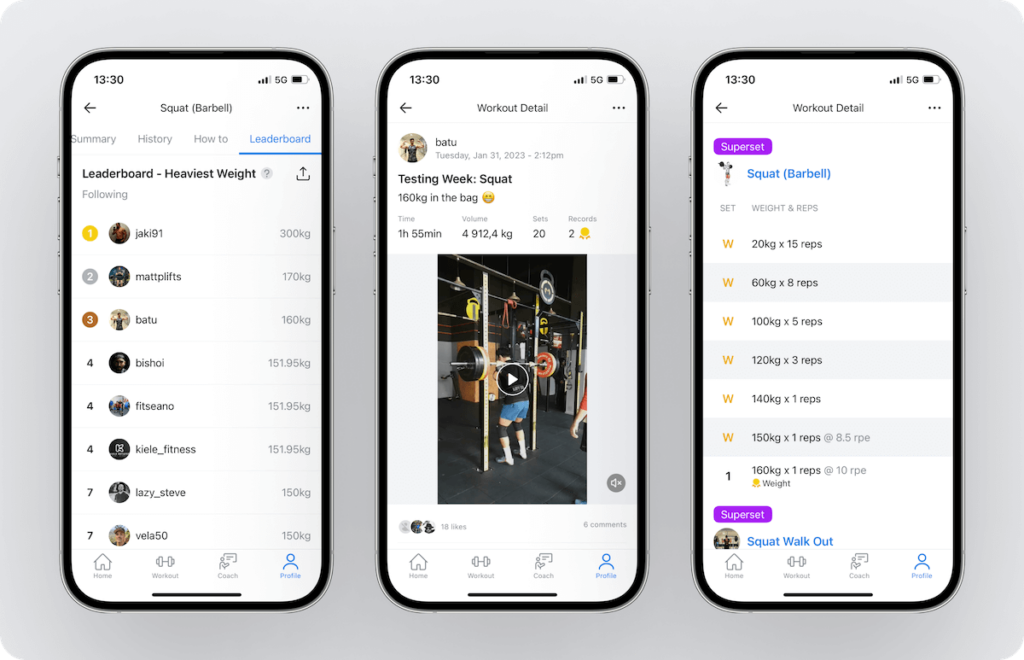
- No Segmentation: A global leaderboard of 100,000 runners is demotivating for beginners. Like Strava's Segment Leaderboards, You need to slice that list by city, skill level, or friend groups.
- No Event Triggers: When a user moves from rank #11 to rank #9, how do you trigger a notification? Redis is a data store, not an event engine. Building the logic to detect these transitions in real-time is a separate, complex project.
The Tech Debt of In-House Leaderboards
As your user base grows to 100k+ MAUs and your feature set matures, your "simple" leaderboard becomes a massive backend burden.
Segmentation at Scale
Managing thousands of independent segmented leaderboards (e.g., "Top Runners in Berlin" or "Intermediate Cyclists") requires significant logic to partition users and manage state. Without careful architecture, your database load will skyrocket every time a workout is uploaded.
Consider the math: if you have 50 cities × 3 skill levels × 4 activity types, that's 600 separate leaderboards to maintain. Each workout upload potentially touches multiple lists. At 10,000 daily active users averaging 1.5 activities each, you're processing 15,000+ leaderboard updates per day—and that's before you add friend groups or gym-specific boards.
Race Conditions & Late Data
Data is messy. A user might sync a week's worth of workouts at once, or a wearable might upload data hours late. Ensuring that rank transitions remain accurate and transactional across disparate segments during high-concurrency periods is a non-trivial engineering lift.
Historical Recaps
Building features like Yearly Wrapped or Month in Review requires reconstructing past leaderboard states from raw activity logs. If you didn't build a robust event-sourcing layer from day one, you'll find yourself running expensive ETL jobs just to tell a user they were the #1 walker in their neighborhood last Tuesday.
Infrastructure Overhead
Large-scale sorted sets are memory-intensive. As you scale, you’ll face the operational overhead of shard management, backups, and maintaining high availability for what was supposed to be a "simple" feature.
Trophy: Leaderboards-as-a-Service
Trophy was built to eliminate this backend debt. Instead of taxing your senior engineers with leaderboard math, you can offload the entire infrastructure to a specialized API designed for high-concurrency gamification.
- Leaderboard Breakdowns: Use breakdown attributes (City, Skill Level, Gym ID) to create dynamic, high-context leaderboards instantly without database migrations or manual sharding.
- Native Rank-Change Analytics: Stop writing custom logic to detect rank shifts. Trophy emits rank change events and provides native analytics, allowing you to power real-time push notifications ("You've been overtaken!") with a simple webhook (or using Trophy's native push notifications feature).
- Automated Metric Aggregation: Trophy’s event-based architecture automatically handles the aggregation state. You get historical recaps and progress tracking out-of-the-box, without expensive database scans.
- Engineered for Scale: Trophy handles the memory compute and data persistence, ensuring your leaderboards remain real-time whether you have 100 users or 100 million.
Build for Your Core, Buy for the Rest
Your engineering team’s time is your most valuable asset. They should be focused on the core value of your app—your unique data, your algorithms, and your user experience—not building the plumbing for leaderboards.
The cost of "free" in-house code is often months of delayed product launches and a growing pile of technical debt. By using Trophy, you can move from prototype to production-grade competition in a single afternoon.
Stop building backend debt. Start using Trophy for free today.
FAQ
Should I use Redis for my leaderboards?
Redis is great for simple, global ranking. However, it lacks the native features needed for modern engagement: historical context (tracking progress over time), segmentation (ranking by city/gym/level), and event triggers (notifying users when they change rank). Building these features on top of Redis creates significant technical debt.
What is "hidden debt" in leaderboard development?
The "hidden debt" refers to the complex infrastructure challenges that arise after the initial prototype. This includes handling late data arrivals (e.g., a watch syncing a week of workouts at once), managing race conditions during high-concurrency periods, and calculating historical recaps ("You were #1 last week") without expensive database scans.
Does Trophy replace my database?
Trophy sits alongside your primary database. You send us the activity events (e.g., "User ran 5km"), and we handle the real-time ranking, segmentation, and history. You can query our API to display the leaderboard in your app without taxing your own servers.
Can I migrate my existing user data to Trophy?
Yes. You can backfill historical activity data into Trophy to instantly populate leaderboards and calculate current standings for your existing user base.
What's the best leaderboard API for fitness apps?
Look for an API that supports: (1) real-time rank updates with low latency, (2) attribute-based segmentation (city, gym, skill level), (3) historical state for "weekly recap" features, (4) webhooks for rank-change notifications, and (5) proven scale. Trophy is purpose-built for these requirements and handles millions of events daily.
How do I build a scalable leaderboard system?
You have two paths: build or buy. Building requires: a fast data store (Redis), a segmentation layer, an event system for rank changes, historical snapshots, and significant ops overhead. Buying from a specialized API (like Trophy) offloads this complexity—you send activity events, we handle ranking, segmentation, and history.
What are the challenges of building leaderboards from scratch?
The main challenges are: (1) Segmentation complexity—managing thousands of micro-leaderboards without N+1 query problems, (2) Late data handling—recalculating ranks when a device syncs old workouts, (3) Race conditions—ensuring consistency when multiple users update simultaneously, (4) Historical state—storing snapshots for "last week's rank" without expensive database scans, and (5) Scale—maintaining sub-100ms response times as you grow.
How much engineering time does a custom leaderboard system require?
Initial prototype: 1-2 weeks. Production-ready with segmentation: 2-3 months. Ongoing maintenance (scale, edge cases, new features): 10-20% of one engineer's time indefinitely. For most startups, that's better spent on core product differentiation. Use our churn rate calculator to model how much revenue churn is already costing you before deciding whether to build or buy.
Can I start with a simple leaderboard and migrate to Trophy later?
Yes, but earlier is better. Migrating mid-scale means backfilling historical data and potentially recalculating all rankings. Starting with Trophy from day one means your leaderboard infrastructure scales with you automatically—no migration pain.
Get the latest on gamification
Product updates, best practices, and insights on retention and engagement — delivered straight to your inbox.