
The Best Way to Add Gamification to a Study App
The best way to gamify a study or revision app is to attach game mechanics to the learning behaviors that actually work. That means rewarding daily retrieval practice, spaced review, and consistency instead of sprinkling points on passive content. The apps that help students learn (not just open the app) share a handful of mechanics: streaks, XP and levels, leaderboards or leagues, spaced repetition, and mastery gating. Streaks tap loss aversion to build habits. Leaderboards add social accountability. Spaced repetition schedules reviews at growing intervals to fight forgetting. Mastery gating makes students prove a skill before moving on. The key is tying engagement mechanics to learning behaviors, so the game loop and the study loop are the same thing.
| App | Core Mechanics | Best For |
|---|---|---|
| Duolingo | Streaks, XP, leagues, hearts, spaced review | Casual daily learners who need external motivation |
| Quizlet | Flashcards, adaptive Learn mode, timed Match games | Term/definition memorization and short-window exam prep |
| Anki | Spaced repetition (SM-2/FSRS) only | Disciplined learners who prioritize long-term retention |
| Memrise | Spaced repetition, points, streaks, leaderboards, native-speaker video | Building vocabulary and training the ear in short sessions |
| Brilliant | Streaks, leagues, XP, interactive problem-solving | Motivated learners who prefer STEM problem-solving to videos |
| Kahoot! | Speed-scored quizzes, live leaderboard, answer streaks | Teachers running group review and classroom engagement |
| Khan Academy | Energy points, tiered badges, mastery levels | Self-paced K-12 learners in a low-pressure environment |
| RevisionDojo | Streaks, friend streaks, XP, leagues, achievements, lifecycle emails | IB and exam students who want structured, habit-forming revision |
| Habitica | RPG layer: avatar, XP, HP, gold, quests, party play | Students who need help building consistency and routine |
| Gizmo | AI flashcards, spaced repetition, streaks, lives, leaderboards | Students who need social accountability and fast card creation |
Duolingo: The Habit-Forming Benchmark
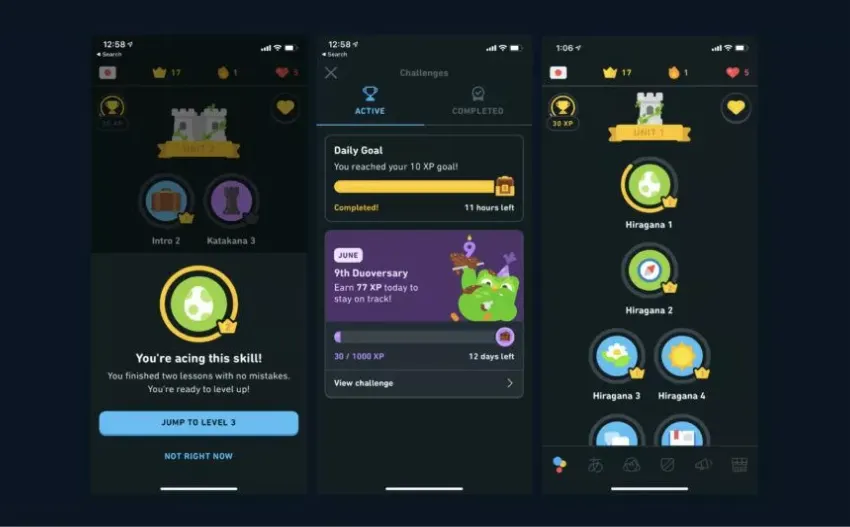
Duolingo treats XP as a shared currency that powers everything. Completing a lesson earns XP, and that XP simultaneously advances your streak, your league ranking, and your achievement progress. The result is a system that feels coherent instead of bolted on. Streaks use loss aversion: the longer your streak, the more painful it feels to break. Streak freezes and repair options give users a safety net so a missed day does not mean quitting. Ten-tier leagues with weekly promotion and demotion add competition without matching new learners against veterans. Best for casual daily learners who need an external nudge to show up.
Quizlet: Flashcards Turned Into Games
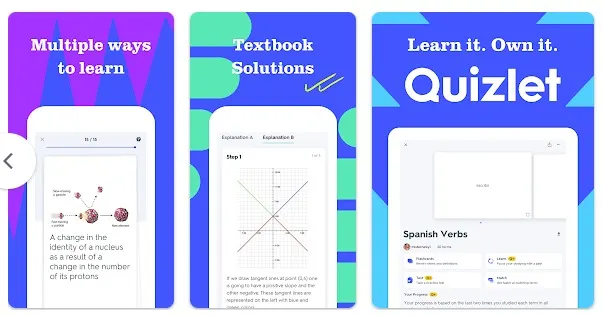
Quizlet turns memorization into competitive recall. Users create flashcard sets (active recall in itself) and then test themselves through adaptive Learn mode, timed Match games, and Live multiplayer races. The gamification layer makes term-definition drills feel faster and more engaging. One honest caveat: Quizlet's spacing is proprietary and not true per-card spaced repetition. The adaptive scheduling is undocumented, and the free Learn mode is capped. Best for vocabulary-heavy, short-window exam prep rather than years-long retention.
Anki: Retention Without the Games
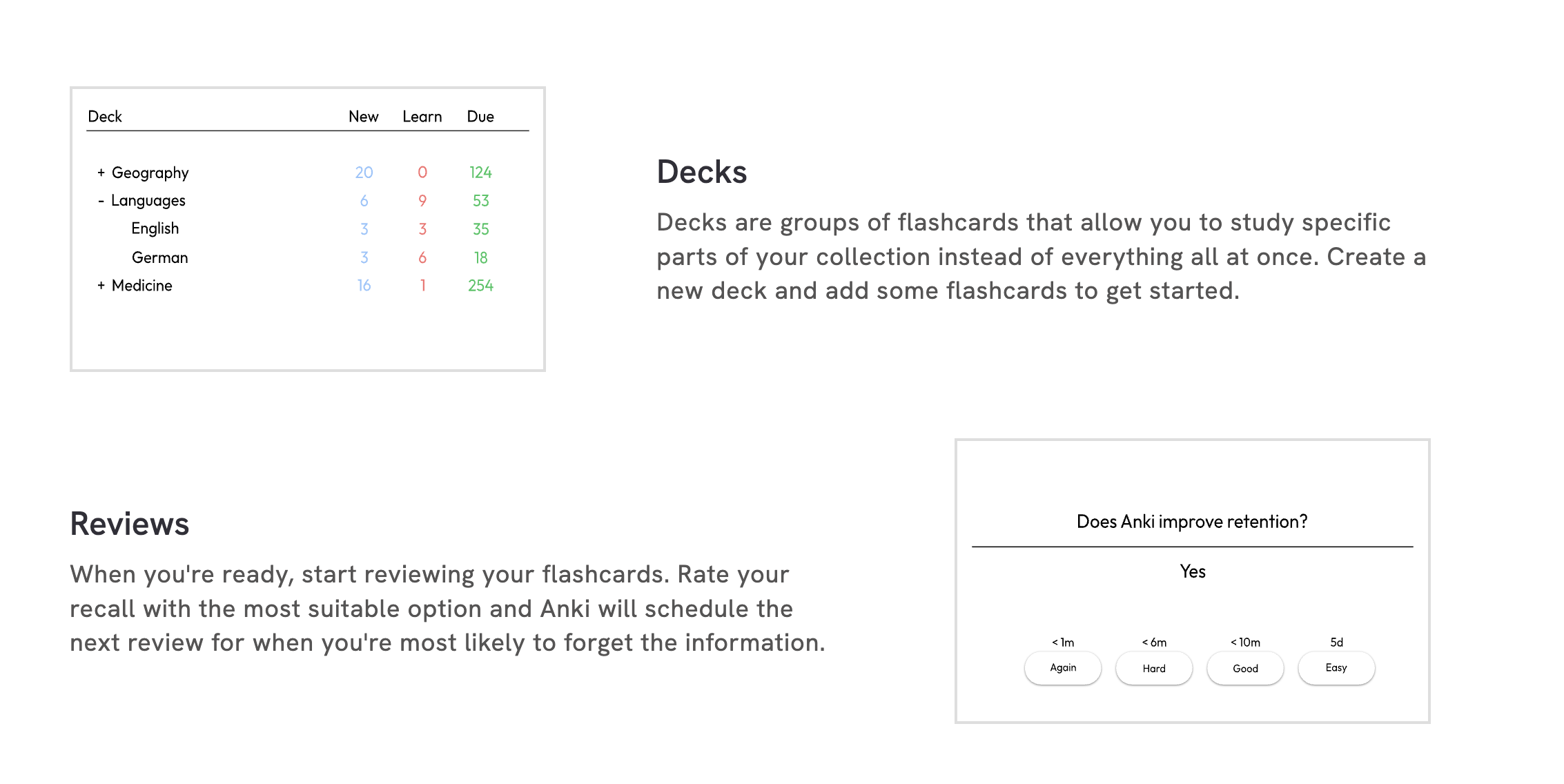
Anki has one mechanic: spaced repetition. It schedules reviews at increasing intervals using an open, documented algorithm (SM-2 or the newer FSRS). There are no streaks, no XP, no leaderboards. Anki is the gold standard for long-term retention, favored by medical students and language learners who need to remember thousands of cards for years. The trade-off is that it provides no motivational scaffolding. If you struggle to show up, Anki will not help you build the habit. Best for disciplined, self-motivated learners who already have the discipline to practice daily.
Memrise: Lighter Gamification, Real Speech
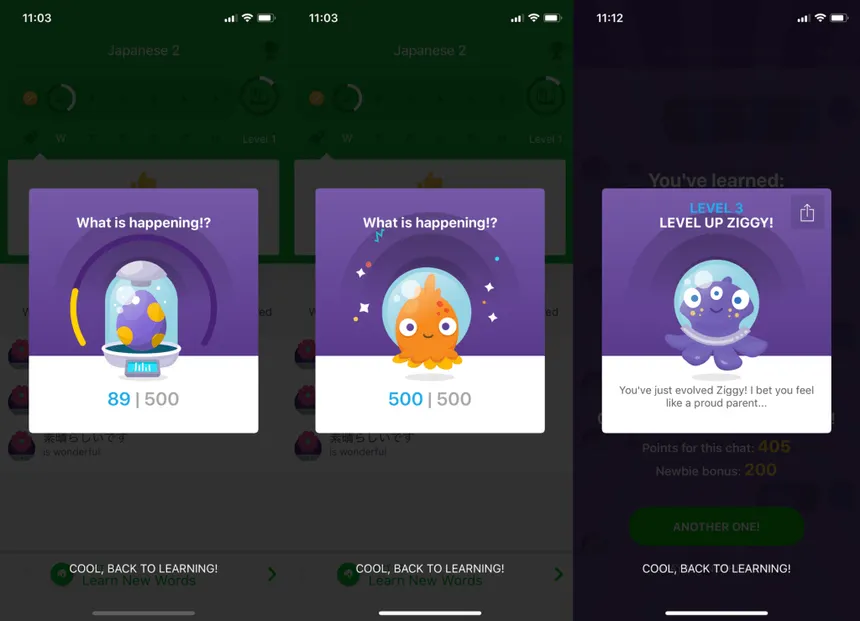
Memrise pairs a proprietary spaced-repetition system (called "watering" your words) with lighter-touch gamification: points, streaks, and leaderboards. It also features native-speaker video clips ("Learn with Locals") that train the ear on real spoken language. The pressure is gentler than Duolingo's aggressive streak messaging, which suits learners who find guilt-trip notifications counterproductive. Best for busy learners who want short daily sessions to build vocabulary and hear authentic pronunciation.
Brilliant: Learning by Doing
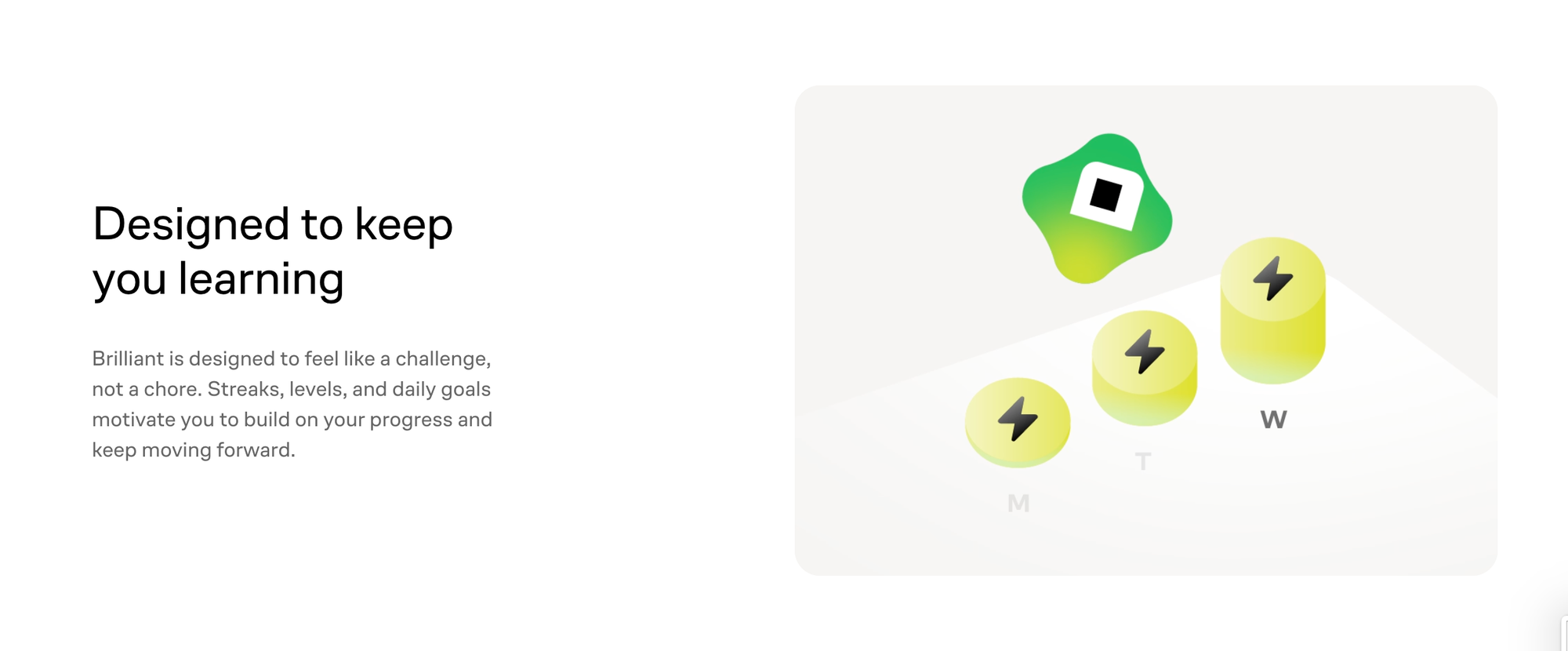
Brilliant keeps gamification deliberately restrained. The core experience is interactive STEM problem-solving: attempt a problem, get feedback, correct your answer, and master the concept before moving on. Streaks, leagues, and XP provide habit scaffolding, but the real engine is the attempt-feedback-correct-master loop. Brilliant states that most of its retention gains come from content delivery, not points. Best for motivated learners who want to build intuition through active problem-solving. Note that Brilliant covers STEM only: math, science, computer science, data, and AI.
Kahoot!: Turning Review Into a Live Game
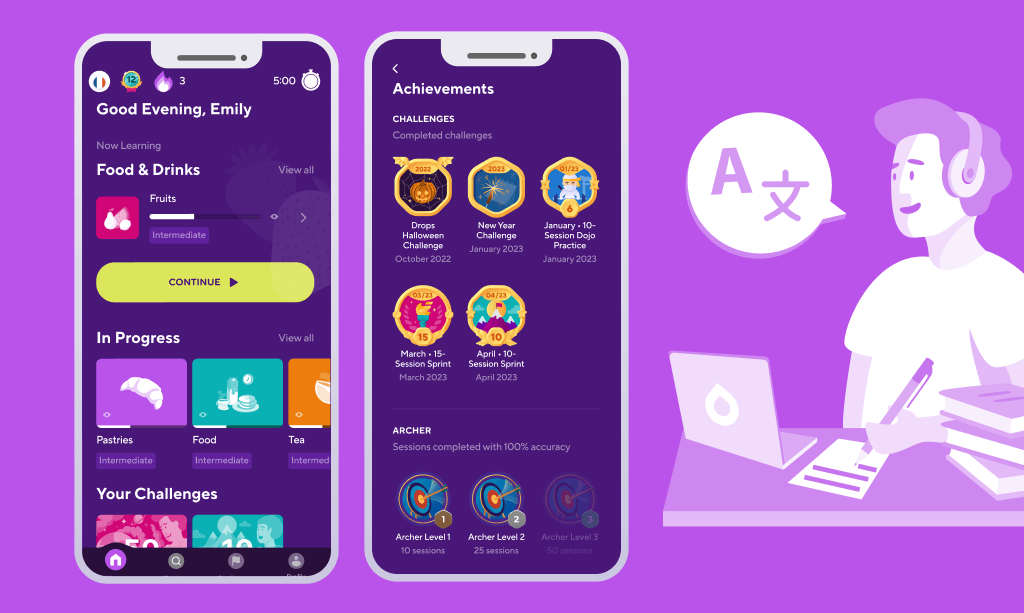
Kahoot! turns classroom review into a high-energy quiz show. Students answer multiple-choice questions in real time, competing on both speed and accuracy. The app awards up to 1000 points per question, scaled by how fast a correct answer is given, and displays a live leaderboard that keeps the room engaged. Answer streaks within a game reward consistency. The mechanic works well for group settings where energy and participation matter. It is less suited for daily solo study because it depends on a live event. Best for teachers and trainers running formative review in a classroom or training-room setting.
Khan Academy: Mastery Over Competition
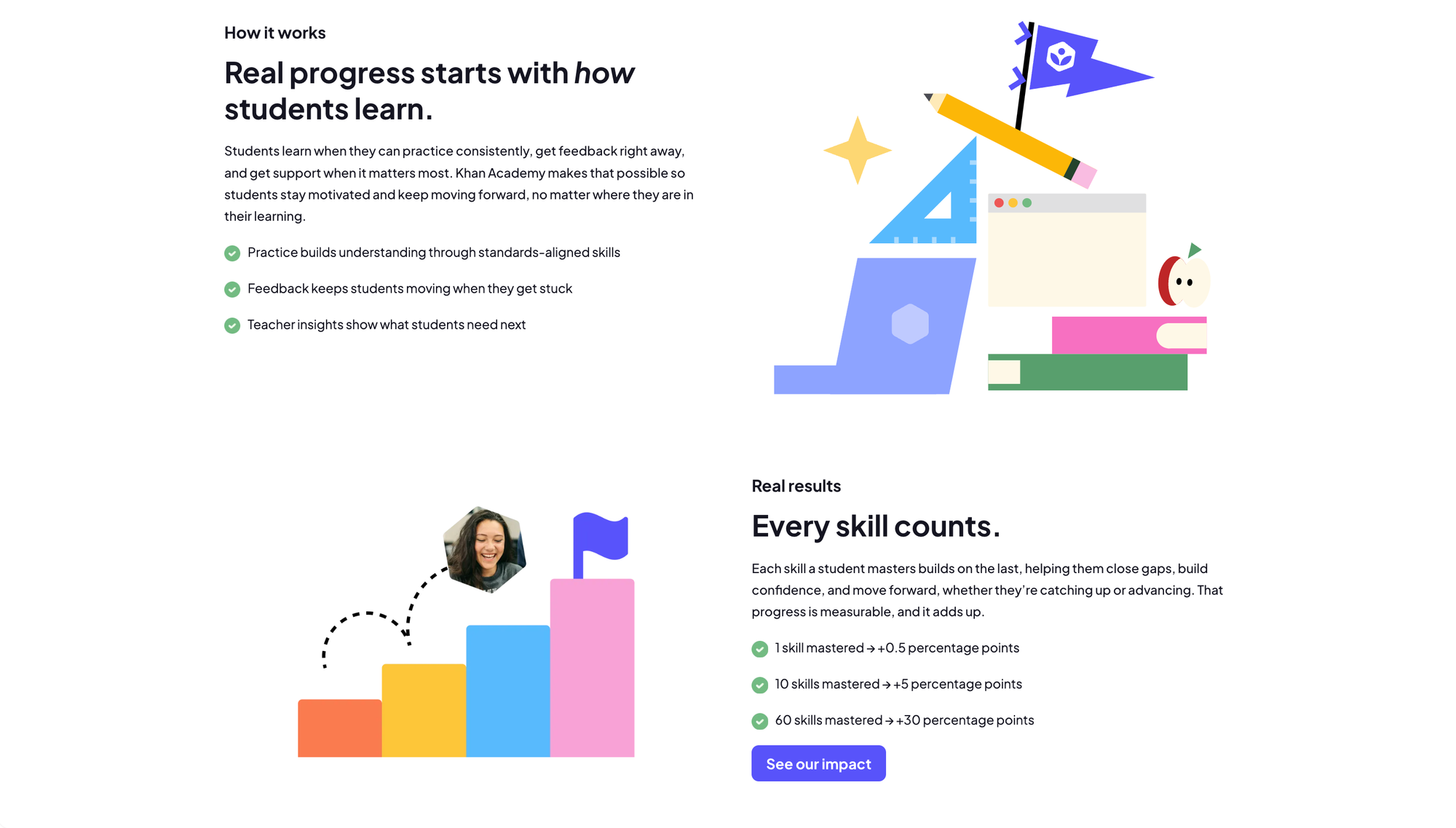
Khan Academy focuses on personal progress over competition. Energy points measure effort (not mastery) and give immediate positive feedback. Five tiers of badges, from common to rare "black hole" badges, reward genuine milestones like completing large numbers of problems. Mastery levels gate progress until a student demonstrates understanding, so learners cannot skip ahead with gaps. Leaderboards play a limited role. The result is a low-pressure environment where students compare themselves to their own past performance, not strangers on the internet. Best for self-paced K-12 and foundational learners who benefit from mastery gating.
RevisionDojo: A Gamified Revision App, End to End
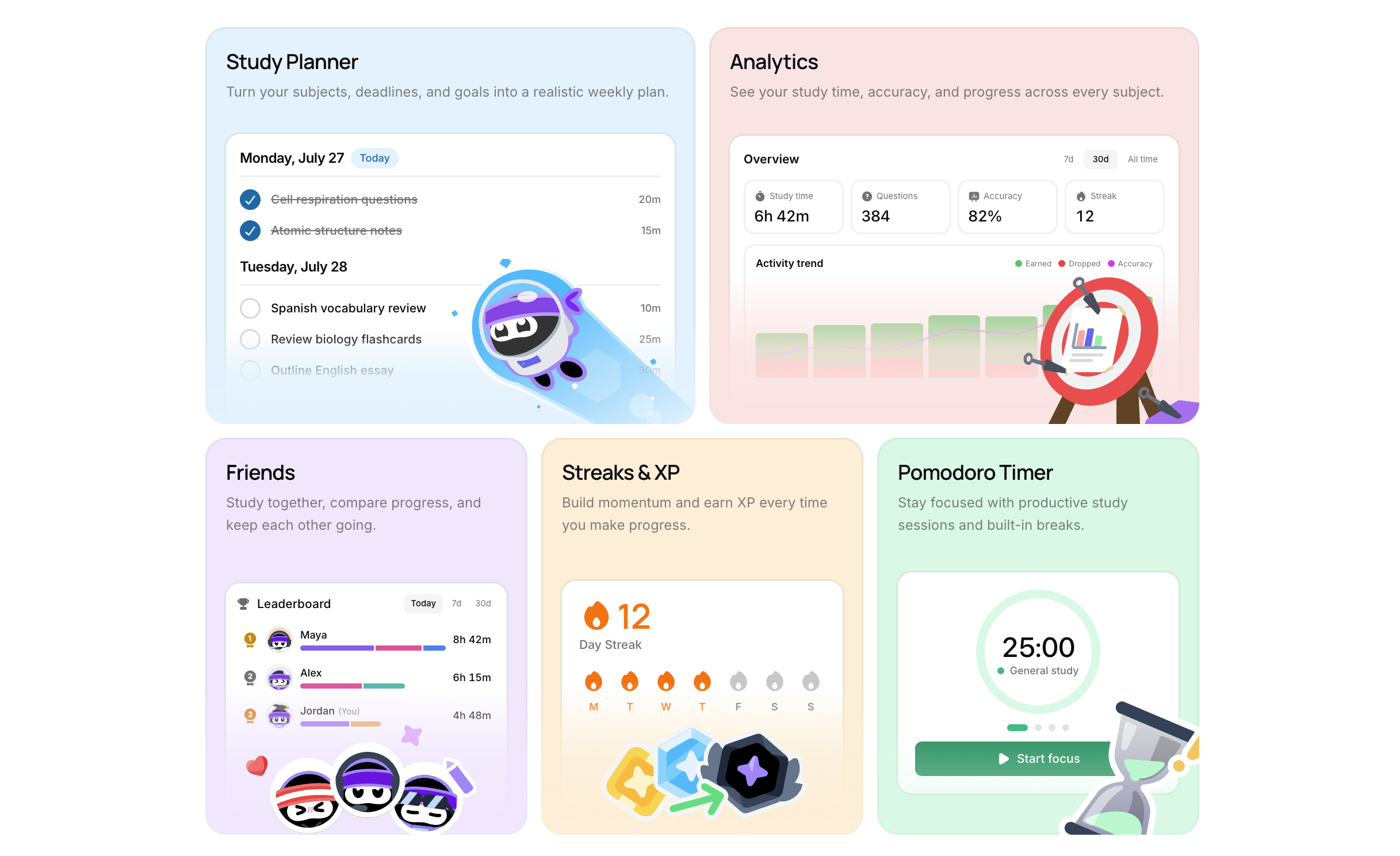
RevisionDojo is a purpose-built exam-revision platform for IB and international-curriculum students. It layers daily streaks, friend streaks, a streak leaderboard, XP, leagues with automatic promotion and demotion, achievements, and gamified flashcards onto structured revision content. The platform also sends lifecycle emails (weekly recaps, reactivation messages, streak reminders) to keep students engaged outside the app. RevisionDojo built its gamification features on Trophy's gamification infrastructure, shipping the full engagement stack quickly instead of building from scratch. The app serves around 650,000 students (company-reported). Best for IB and exam students who want structured, habit-forming revision with social and competitive elements.
Habitica: Gamify the Discipline, Not the Content
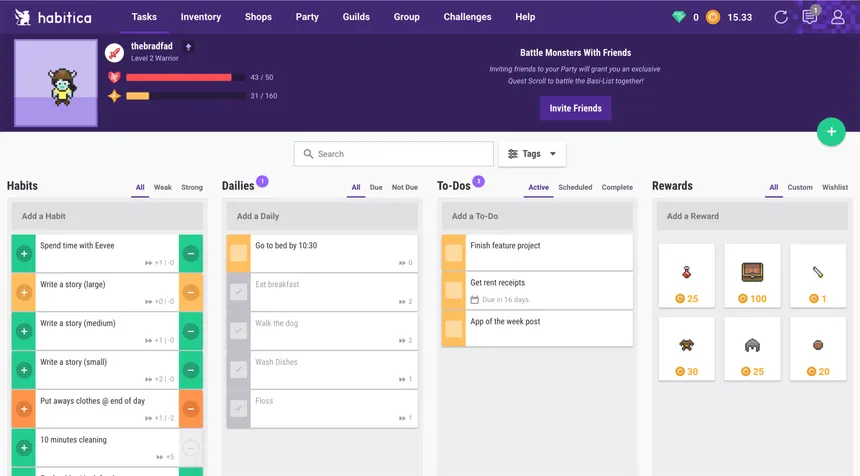
Habitica does not teach content. It gamifies the discipline of studying. The app wraps a full retro-RPG layer over task management: a customizable avatar, XP, gold, health points, levels, gear, pets, quests, and party play. Users create three task types: Habits (positive or negative behaviors), Dailies (recurring tasks like "study flashcards for 20 minutes"), and To-Dos (one-time tasks). Completing tasks earns XP and gold. Missing Dailies or indulging bad Habits costs HP, and hitting zero HP means losing a level, gold, and equipment. This loss mechanic adds stakes to procrastination. Habitica is frequently cited as ADHD-friendly because the game layer externalizes motivation. Best for students who struggle with consistency and routine rather than understanding the material.
Gizmo: AI Flashcards Built to Be Sticky
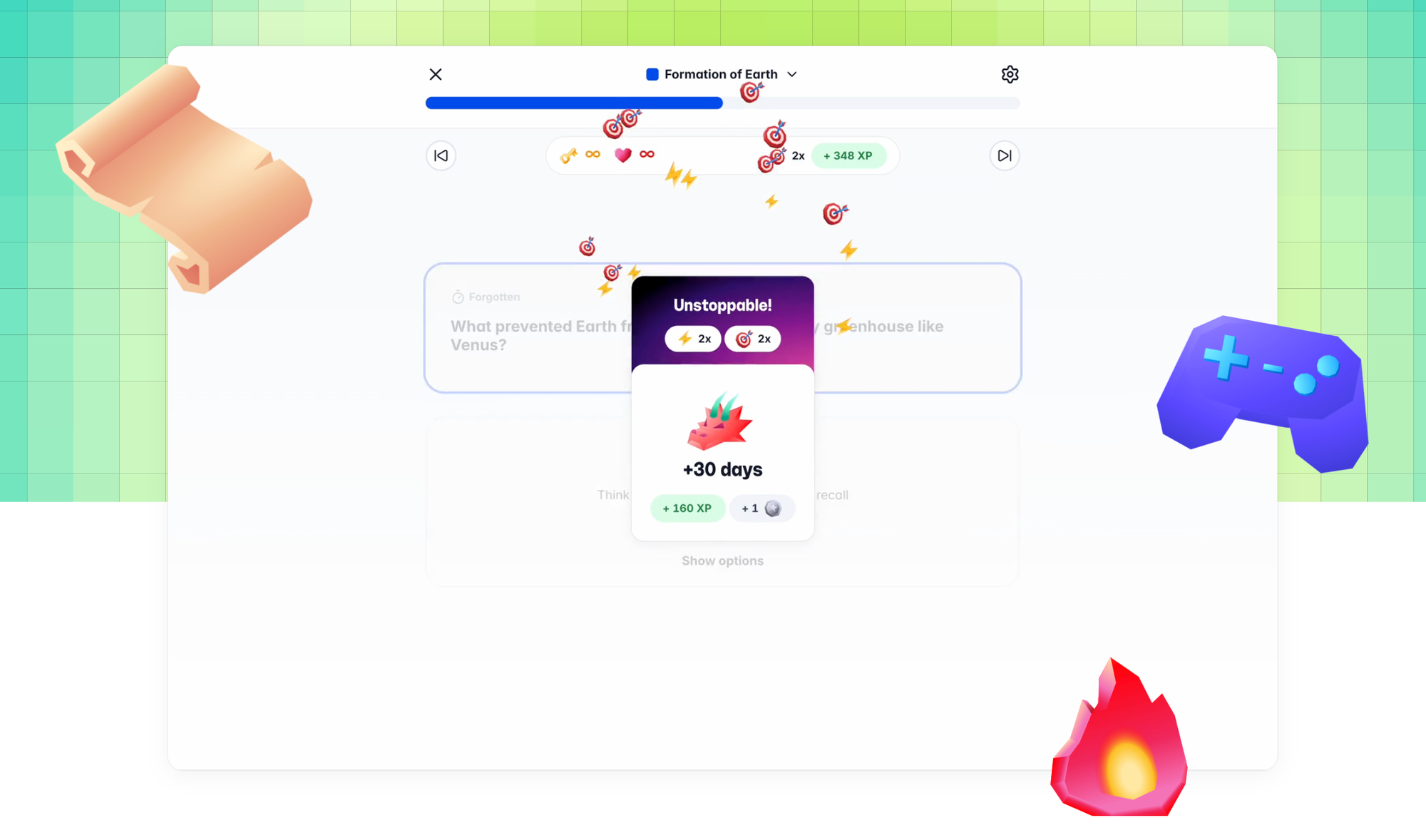
Gizmo generates flashcards and quizzes from imported content (PDFs, YouTube videos, PowerPoints, Quizlet decks, Anki files, and scanned notes) using AI. Spaced repetition and active recall power the review loop. On top of that, Gizmo adds streaks, limited lives/hearts, leaderboards, friend challenges, and study groups. The social layer targets the motivation bottleneck: if you already know you should study but cannot make yourself do it, social accountability helps. The honest trade-off: Gizmo's scheduling is a black box (no visible intervals or named algorithm), and streak pressure can shift focus from learning to "not breaking the streak." Best for students who need social accountability and want fast, low-effort card creation.
The Mechanics That Separate the Best Study Apps
The apps that help students learn (not just open the app) share four mechanics rooted in learning science and behavioral psychology.
Retrieval practice. Recalling an answer beats rereading it. Every time you force yourself to retrieve information from memory, you strengthen the neural pathway for that fact. Across 159 studies, retrieval practice compared with repeated study had an effect size of g = 0.50, and 81% of comparisons favored retrieval practice (Rowland, 2014). Flashcard apps like Anki, Quizlet, and Gizmo are built on this principle.
Spaced repetition. Reviewing at growing intervals fights forgetting more efficiently than massed practice. Cepeda and colleagues (2006) reviewed 839 assessments of spaced practice across 317 experiments and found spaced repetition reliably improves retention. The optimal spacing gap grows with how long you need to remember, which is why Anki and Memrise schedule cards days or weeks apart as you learn them.
Streaks. Streaks convert a long-term goal ("pass the exam") into a daily yes/no decision. Loss aversion, the principle from Kahneman and Tversky's 1979 prospect theory that people work harder to avoid a loss than to achieve an equivalent gain, makes a 50-day streak feel precious. Streaks build the habit of showing up, but they do not teach anything by themselves. Pair them with retrieval and spacing to make the daily session productive.
Mastery gating. Requiring students to demonstrate understanding before advancing prevents them from building on a shaky foundation. Khan Academy uses mastery levels for this purpose. The mechanic keeps students honest about what they actually know.
Does gamification itself improve learning? A 2020 meta-analysis found gamification had a small but significant positive effect on learning, with a cognitive effect size of g = 0.49 (Sailer & Homner, 2020). The size of the effect depends heavily on how the gamification is designed. Points and badges alone are weakest. Combining competition with collaboration and tying rewards to learning behaviors boosts outcomes.
How to Build These Mechanics Into Your Own App
If you are building a study or revision app, you have two paths: build gamification infrastructure in-house or use pre-built APIs.
The hard parts are not obvious at first. Timezone handling for streaks is tricky (does a user in Tokyo reset at the same time as a user in London?). Streak-freeze logic needs to handle edge cases like daylight saving time. Leaderboard ranking at scale requires windowed aggregation and efficient indexing. Cheat prevention matters once users have incentives. Experimentation infrastructure is necessary to prove that gamification is actually improving retention.
Most teams underestimate the timeline. A simple streak-only implementation takes 2-3 weeks. A full system with multiple mechanics, edge-case handling, and a dashboard for product managers takes 6-12 months. That is 6-12 months not spent building your core product.
Trophy provides the infrastructure so you can ship in days instead of months. The platform offers APIs and type-safe SDKs (seven languages), no-code configuration for product managers, lifecycle email campaigns, and an open-source UI kit. You can add gamification to your app by sending events ("user completed flashcard," "user finished lesson") and querying state (streak count, achievement progress, leaderboard rank).
A concrete path:
- Pick the core study action you want to reinforce (flashcard flipped, lesson completed, question answered).
- Attach a metric so Trophy tracks cumulative progress.
- Layer streaks with freezes to build daily habits.
- Add achievement badges for milestones (7-day streak, 100 cards reviewed).
- Roll out a weekly leaderboard to add friendly competition.
The mechanics are well established. The psychology is understood. The infrastructure exists. What remains is execution.
How to Choose the Right Study App for Your Goal
Match the app to the outcome you care about.
Long-term retention and heavy memorization: Anki or Gizmo. Anki gives you full control over scheduling. Gizmo adds social accountability and AI-generated cards.
Language learning: Duolingo or Memrise. Duolingo is more aggressive with engagement loops. Memrise is gentler and emphasizes real spoken language.
STEM intuition: Brilliant. Interactive problem-solving builds understanding better than videos.
Structured exam revision: RevisionDojo. Purpose-built for IB and international curricula, with a full engagement stack and lifecycle emails.
Group or classroom review: Kahoot!. Best for live, high-energy formative assessment.
Building study consistency: Habitica. If the bottleneck is showing up, not understanding the material, gamify the discipline.
Ask yourself: What is the behavior I need to change? Then pick the app (or build the mechanic) that reinforces that specific behavior.
FAQ
How Do I Gamify My Studies?
Attach small rewards (points, streaks, badges) to the study actions that actually improve learning: daily retrieval practice and spaced review. Avoid rewarding time spent or passive reading.
Why Do Most Gamified Education Apps Fail?
They add points and badges to boring content instead of building game mechanics into the learning activity itself. Once the novelty wears off, engagement fades because the core experience has not changed.
Which Mechanics Actually Help Retention?
Retrieval practice and spaced repetition drive retention. Streaks and leaderboards drive the consistency that makes those two happen.
Are Gamified Study Apps Effective For People With ADHD?
Early research is promising, with gamified learning shown to support attention and academic progress for people with ADHD by externalizing motivation and providing immediate feedback. The evidence is still emerging, so treat it as a helpful aid rather than a guaranteed fix.
Is Gamification Effective In Education?
Yes, with a caveat: a 2020 meta-analysis found small but significant positive effects on cognitive learning outcomes, and the size of the effect depends heavily on how the gamification is designed.
s heavily on how the gamification is designed.
Get the latest on gamification
Product updates, best practices, and insights on retention and engagement — delivered straight to your inbox.
The gamification layer for consumer apps
Drop-in gamification features you can ship this sprint. Increase retention and user engagement without sacrificing your roadmap.
 Book a call