The 8 Best Gamification APIs for Developers & Product Teams in 2026

Gamification used to be something you built from scratch. If a product team wanted to add streaks, achievements, or leaderboards, they had to pause their roadmap, spin up a new database, and write complex backend logic to handle state, timezones, and edge cases.
Today, gamification is infrastructure. Just as you wouldn't build your own payments processor (Stripe) or search engine (Algolia), modern product teams leverage APIs to power their engagement loops.
But the market has fragmented. "Gamification" now refers to everything from enterprise loyalty programs to spin-the-wheel marketing campaigns. Choosing the wrong tool, buying a loyalty engine when you need habit-building streaks, or a marketing widget when you need native infrastructure, is a common and costly mistake.
This guide breaks down the top 8 players in the 2026 landscape to help you choose the right tool for your specific goal: retail loyalty, marketing campaigns, or native product infrastructure.
Trophy
Best for: Product teams building native, habit-forming apps.
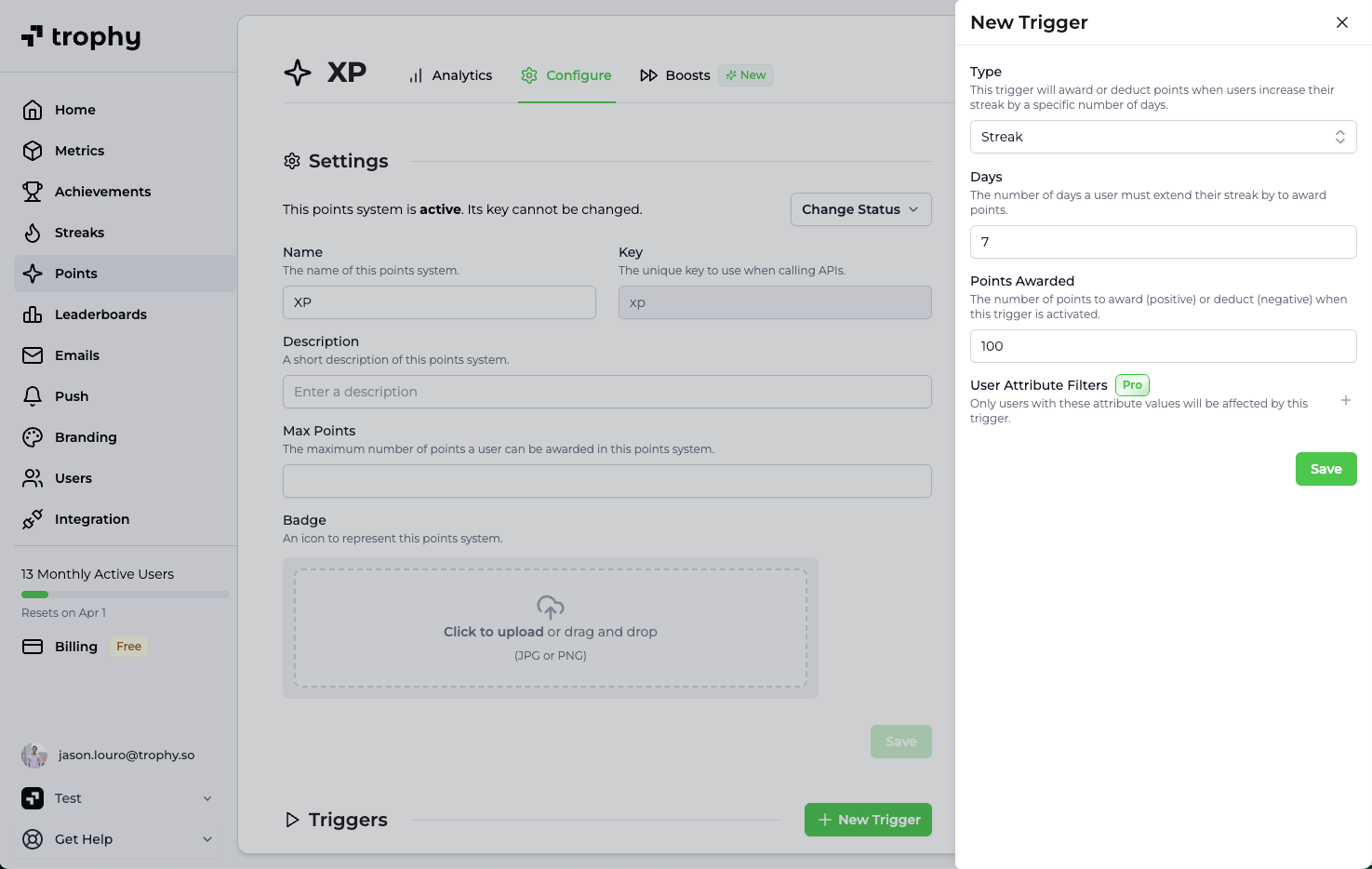
Trophy is headless gamification infrastructure designed for product teams who want full control over the user experience. Instead of giving you pre-built widgets, Trophy provides a powerful API and SDKs to handle the backend logic of streaks, achievements, leaderboards, and XP while you build the frontend to match your app's design perfectly.
This makes Trophy a strong choice for any app, consumer or B2B, where the gamification needs to feel like a core part of the product, not a bolted-on widget. It also includes a "nudging engine" on all plans, allowing you to trigger real-time push notifications or emails based on user behavior.
Key Features
- Headless Infrastructure: You own the pixels. Trophy powers the logic.
- Developer Experience: Modern SDKs, transparent documentation, and intuitive APIs.
- Access: Trophy is self-serve first meaning no sales process unless customers want it.
- Habit Focus: Specialized primitives for retention loops (streaks, achievements, XP) rather than one-off campaigns.
Trade-Offs
- Implementation: Because it is headless, you have to build the UI yourself. Trophy powers the engine, but you build the car.
- Scope: Focused entirely on product engagement and retention, not marketing campaigns or affiliate loyalty.
Talon.One
Best for: Enterprise retail & unified promotions.
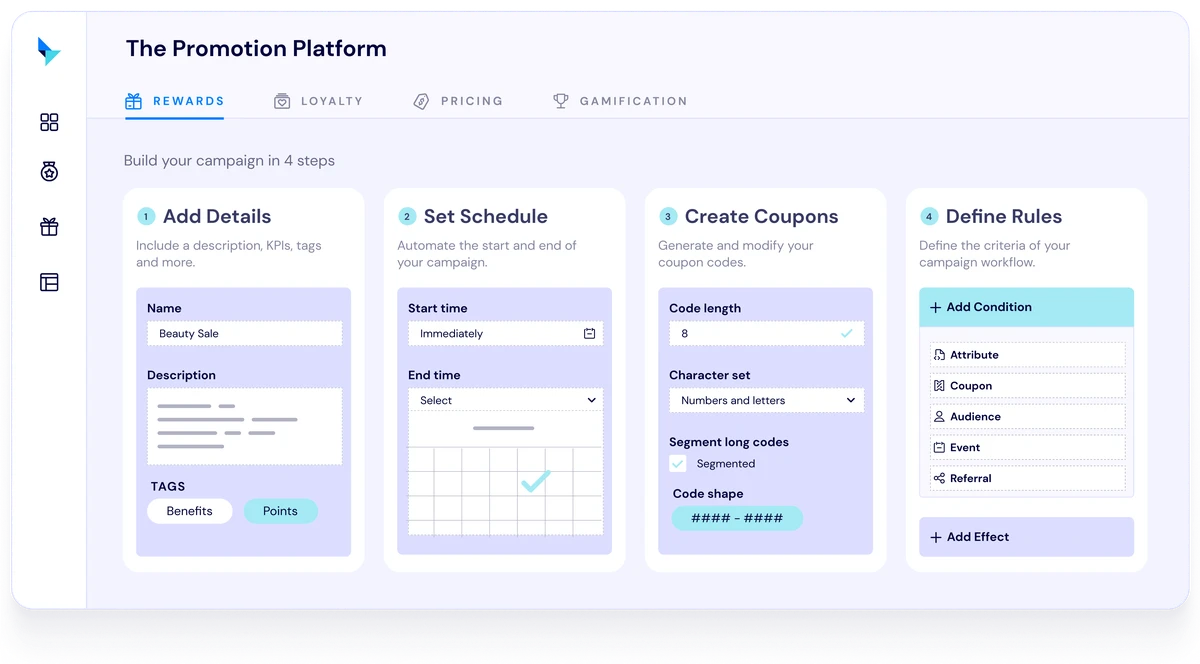
Talon.One is a powerhouse in the retail and e-commerce space. It is primarily a Promotion Engine-the brain behind complex coupon codes, bundling discounts ("Buy X get Y"), and referral programs for massive brands like Adidas and Sephora.
While they have recently added a gamification engine (challenges, badges), their core DNA is transactional. They excel at "Earn & Burn" mechanics where customer actions directly translate to monetary rewards or discounts. If your primary goal is to manage a global retail promotion strategy with some gamified elements layered on top, Talon.One is the enterprise standard.
Talon.One Features
- Unified Rule Engine: Combine promotions, loyalty, pricing, and gamification in one logic layer.
- Enterprise Scale: Built to handle massive transaction volumes for global retailers.
- Transaction Focus: Deep capabilities for cart-level discounts and bundling.
Talon.One Trade-offs:
- Focus: Gamification is a secondary feature set. If you aren't using the promotion/discount capabilities, the platform may feel like overkill for simple user engagement.
- Pricing: Enterprise-grade, quote-based pricing.
Mambo.IO
Best for: Enterprise on-premise & employee engagement.
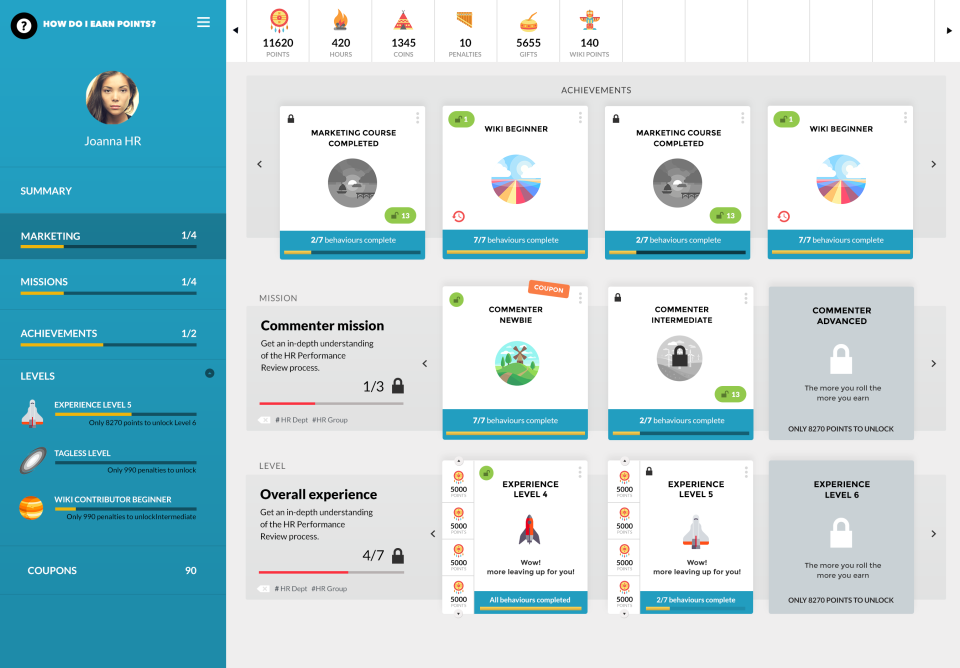
Mambo.IO is an enterprise-grade gamification platform that stands out for one key reason: on-premise deployment. For organizations in banking, healthcare, or government with strict data residency and compliance requirements, this is a critical differentiator. If your data cannot leave your own infrastructure, Mambo.IO is one of the few options that can meet that need.
Beyond deployment, Mambo.IO has a strong track record in employee engagement-gamifying call center metrics, sales performance, and internal training programs. Companies like ING and Proximus use it to motivate staff with leaderboards, achievements, and peer-to-peer recognition.
Mambo.IO Features
- On-Premise Option: Host on your own infrastructure for full data sovereignty.
- Employee Engagement: Purpose-built for internal use cases (call centers, L&D, sales teams).
- Mature Feature Set: CRM integration, coupons, peer recognition, and activity streams.
Mambo.IO Trade-Offs
- Tech Stack: Built on Java/MongoDB. May feel heavy or dated for modern SaaS teams.
- Consumer Apps: Positioning is enterprise and employee-focused, less suited for consumer app retention.
- Pricing: Quote-based, with CPU-based licensing for on-premise deployments.
StriveCloud
Best for: Companies wanting a managed, drop-in, turnkey gamification solution.
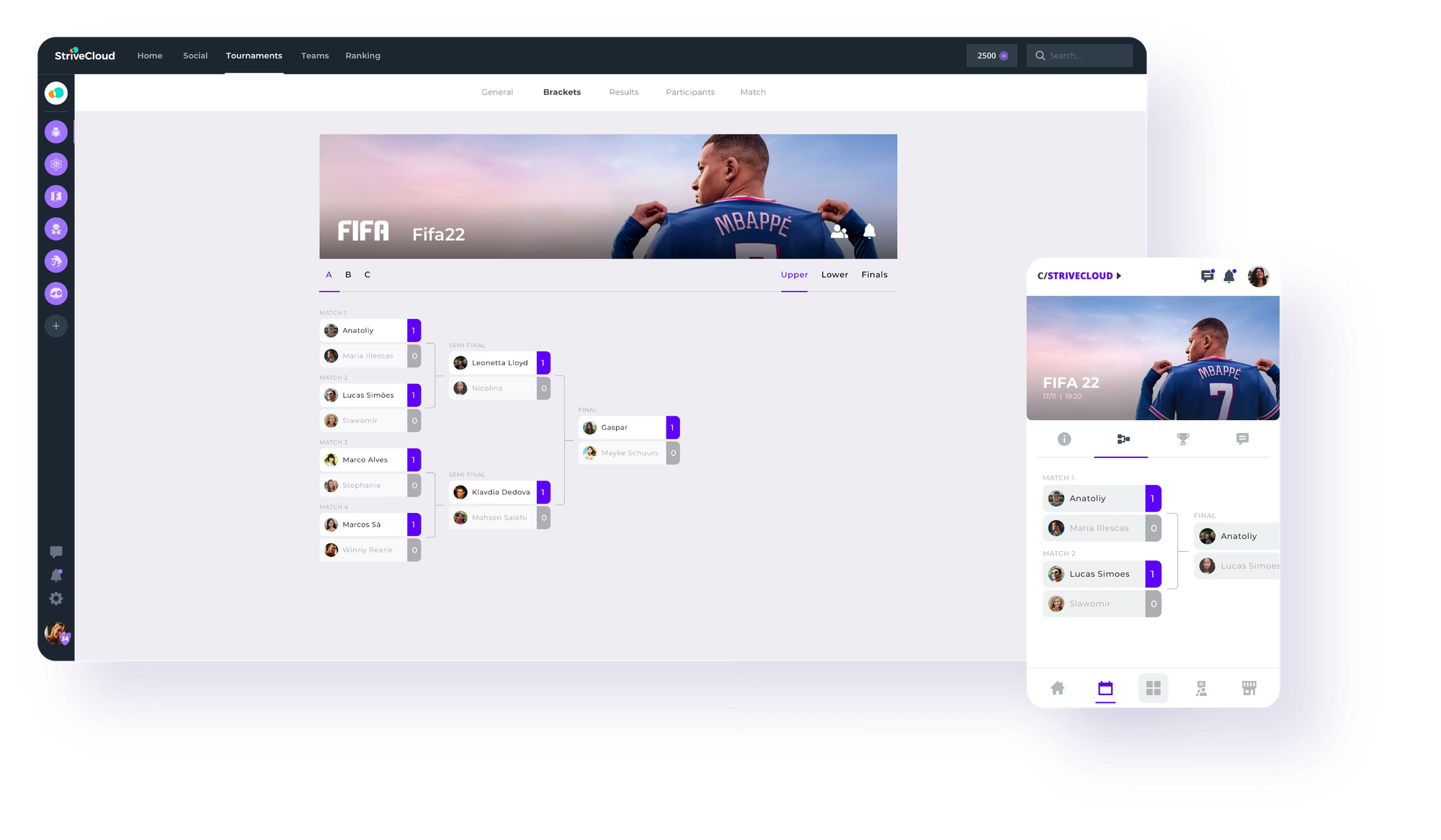
StriveCloud positions itself as an "App Gamification & Engagement Engine," and it works for teams that want a complete, batteries-included system. If you want to launch a full virtual economy with lotteries, mini-games, and a rewards shop without building it yourself, this is a strong contender.
They offer a "no-code first" approach, providing embeddable widgets and iframes that let you drop gamification into your app quickly. This is ideal for teams that want to move fast and rely on StriveCloud's industry playbooks (Mobility, FinTech, Health) to guide their strategy.
StriveCloud Features
- Full Engagement Suite: Includes lotteries, mini-games (quizzes, scratch cards), and a virtual economy out of the box.
- Widgets & iFrames: Drag-and-drop components for fast integration.
- Strategist Support: Offers a dedicated strategist model to co-design your loops.
Strive-Cloud Trade-Offs
- Control: Because it relies heavily on widgets/iframes, you sacrifice pixel-perfect UI control. It can be harder to make the experience feel truly "native" to your brand.
- Pricing: Starts around €999/month (Enterprise/Demo-first), which may be a barrier for smaller startups. Features like notifications cost more.
- Access: It's a demo-first platform, meaning you can't just sign up and start building; you'll need to go through a sales process.
Open Loyalty
Best for: E-commerce brands building custom loyalty programs.
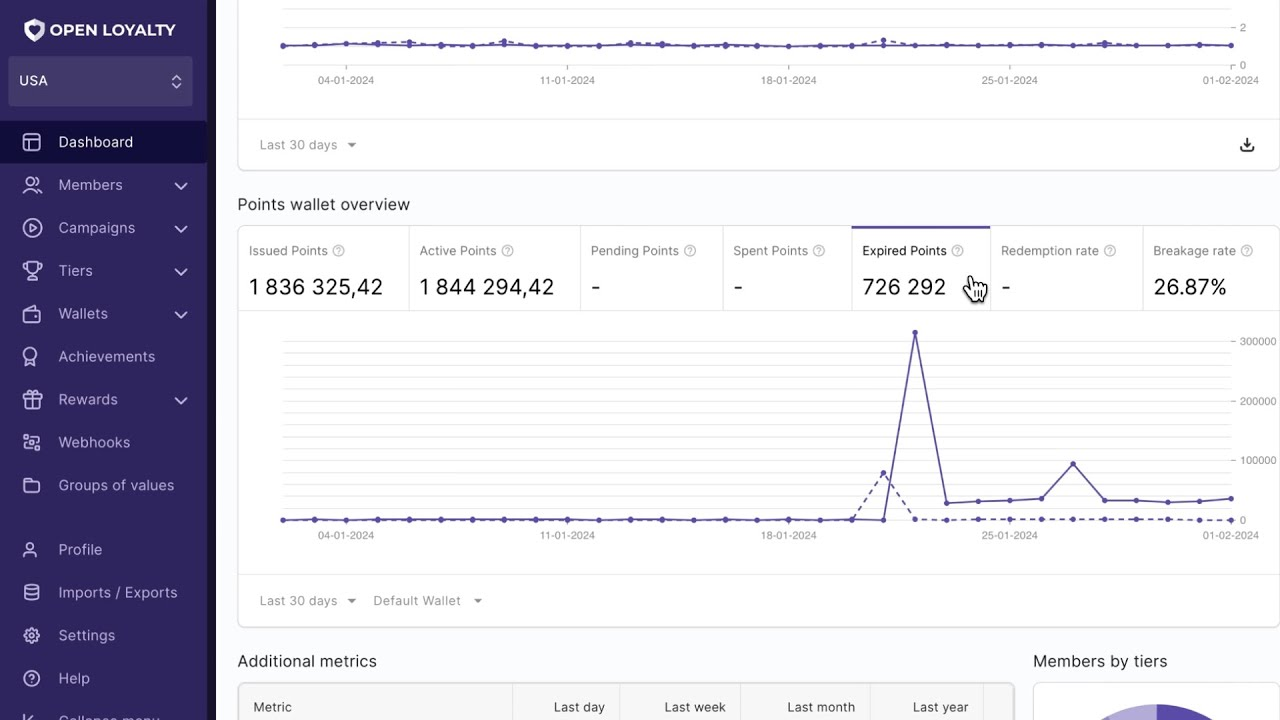
Open Loyalty is an API-first loyalty engine that combines transactional loyalty (points, tiers, wallets) with gamification mechanics (streaks, badges, challenges). It is built for enterprise e-commerce and retail brands that need a robust foundation for a customer loyalty program.
Backed by OEX SA (a publicly traded company with €199M revenue) and recognized by Gartner, Open Loyalty is a serious player for companies that want to build a custom, headless loyalty experience integrated with their POS, mobile app, and website.
Open Loyalty Features:
- API-First Architecture: True headless loyalty, built for custom integrations.
- Points & Wallets: Deep capabilities for managing points liability, tiers, and redemption.
- Enterprise-Grade: ISO 27001 certified, GDPR compliant, 99.99% uptime SLA.
Open Loyalty Trade-Offs
- Loyalty-First: While it includes gamification features (streaks, badges), it is optimized for "Earn & Burn" loyalty programs centered on transactions, not pure behavioral engagement.
- Pricing: Enterprise, quote-based. Requires a sales process.
Brame
Best for: Marketing teams running short-term campaigns.
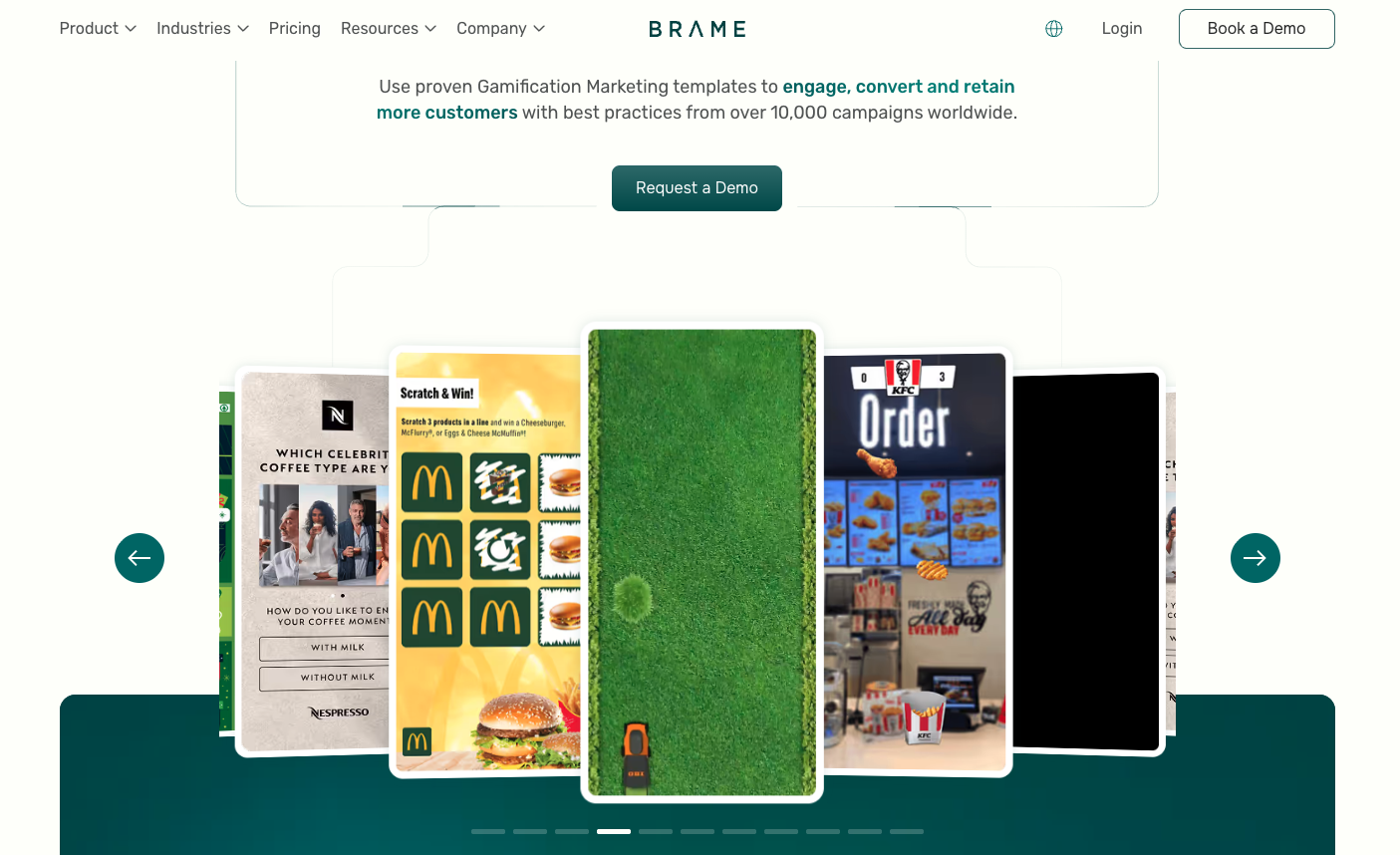
Brame is a marketing gamification platform, not an in-app engagement tool. It excels at creating interactive campaign experiences like spin-the-wheel promotions, scratch cards, advent calendars, and quizzes that live on dedicated microsites or landing pages.
If your goal is lead generation for a Black Friday campaign, a gamified sweepstakes for a product launch, or an interactive quiz to capture email addresses, Brame is purpose-built for that. Brands like SPAR, Lindt, Heineken, and KFC use it to drive impressive campaign metrics (+44% sales conversion, 72% newsletter opt-in).
Brame Features
- 100+ Game Templates: Spin wheels, scratch cards, quizzes, memory games, and more.
- No-Code Builder: Marketers can create and launch campaigns without developer help.
- Lead Gen Focus: Built-in forms, CRM integration, and analytics for acquisition.
Brame Trade-Offs
- Campaign-Based: Designed for time-limited promotions, not ongoing in-app retention loops.
- Not Infrastructure: It's an embed/microsite tool, not an API for building native product features.
Pricing: Tiered SaaS (Light, Essentials, Business, Enterprise).
Pointagram
Best for: Sales teams & course creators.
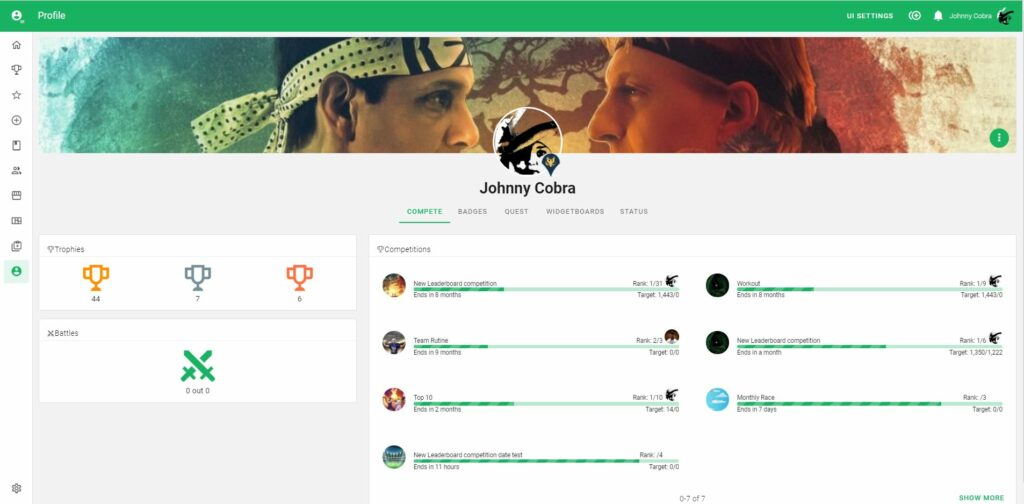
Pointagram takes a different approach: it's gamification for existing business tools. If you're a sales manager using Pipedrive or HubSpot and want to create leaderboards and competitions for your team, or a course creator on Thinkific wanting to add badges for students, Pointagram plugs in directly.
It's simple, accessible, and affordable-with a free plan and pricing starting at €4/player/month. This makes it a great choice for non-technical users who want to add gamification without building anything custom.
Pointagram Features
- Plug-and-Play Integrations: Native connections to Pipedrive, HubSpot, Salesforce, Thinkific, Teachable, and Slack.
- Simple & Accessible: Built for team leads and managers, not developers.
- Affordable: Free tier available; paid plans start at €4/player/month.
Pointagram Trade-Offs
- Not for Product Infrastructure: It gamifies your CRM or LMS data, not user-facing product features.
- Limited API Depth: The API exists, but the platform is integration-first, not developer-first.
Captain Up
Best for: iGaming operators (sports betting, casino).
CaptainUp is a gamification and loyalty platform with over a decade of experience in the iGaming vertical. If you're running a sports betting app or online casino, this is a purpose-built solution with regulatory compliance baked in.
Their platform combines traditional gamification mechanics (points, badges, leaderboards, XP) with promotional "quick games" (spin-the-wheel, scratch cards, lucky draws) that iGaming operators love. They also include a full loyalty suite with tiers, rewards store, and real-world redemption-critical for casino player retention.
Captain Up has endorsements from behavioral science heavyweights like Prof. Dan Ariely (Duke) and gamification expert Yu Kai Chou, plus multiple iGaming industry awards (Gold Winner for "Innovation in Mobile" in 2024 and 2025).
Captain Up Features
- iGaming-Native: Built for gambling regulations and compliance from day one.
- Full Gamification Suite: Points, badges, levels, challenges, tournaments, leaderboards, XP, streaks.
- Quick Games: Spin wheels, scratch cards, lucky draws-promotional mechanics iGaming players expect.
- Loyalty + Rewards Store: Multi-tier programs with branded prize redemption.
- Behavioral Intelligence: Personalized challenges and rewards based on player segmentation.
Captain Up Trade-Offs
- Vertical Focus: Deeply optimized for iGaming. Features may feel heavy or misaligned for general consumer apps.
- Pricing: ~$500/month for up to 1,000 users; enterprise quotes for larger deployments.
- Demo-First: No self-serve signup; requires a sales conversation.
Summary: Which Tool Fits Your Stack?
| Goal | Best Choice |
|---|---|
| Native Product Engagement (Streaks, Achievements) | Trophy |
| Enterprise Retail Promotions & Loyalty | Talon.One |
| On-Premise / Employee Engagement | Mambo.IO |
| Custom E-commerce Loyalty Programs | Open Loyalty |
| Short-Term Marketing Campaigns | Brame |
| Sales Team / LMS Gamification | Pointagram |
| iGaming (Sports Betting, Casino) | Captain Up |
The "best" gamification API depends entirely on your use case. Are you running a marketing campaign or building a core product feature? Do you need pre-built widgets or headless infrastructure? Is this for your customers or your employees?
Match the tool to your integration depth, UI control requirements, and business goal-and you'll find the right fit.
FAQ
What is a gamification API? A gamification API is a set of developer tools that let you add engagement mechanics-like streaks, achievements, points, and leaderboards-to your application without building the backend logic from scratch.
What's the difference between a gamification platform and gamification infrastructure? Platforms (like StriveCloud or Brame) provide pre-built widgets and UIs. Infrastructure (like Trophy) provides headless APIs and SDKs, giving you full control over the frontend design.
Do I need a developer to use gamification tools? It depends on the tool. Platforms like StriveCloud, Brame, and Pointagram are designed for non-technical users. Infrastructure tools like Trophy are designed for product and engineering teams.
How much do gamification APIs cost? Pricing varies widely. Some offer free tiers (Pointagram), others are usage-based (Trophy), and many enterprise tools (Talon.One, Open Loyalty, Mambo.IO) require custom quotes.
Can I use gamification for employee engagement? Yes. Mambo.IO and Pointagram are specifically designed for employee motivation, sales teams, and internal training programs.
What gamification features are most important for retention? Streaks (daily engagement loops), achievements (milestone recognition), and leaderboards (social competition) are the core primitives for habit formation and retention.
Get the latest on gamification
Product updates, best practices, and insights on retention and engagement — delivered straight to your inbox.